Proper tire maintenance is essential for ensuring your vehicle’s safety, performance, and longevity. Tires are the only contact point between your vehicle and the road, so maintaining them in optimal condition is critical. Three key aspects of tire maintenance are rotation, alignment, and balancing. While these terms are commonly used by automotive professionals, many vehicle owners may not fully understand their significance. In this article, we will break down each of these processes and explain why they’re crucial for your vehicle’s health.
1. Tire Rotation: Even Wear for Longer Life
Tire rotation refers to the practice of moving each tire to a different position on the vehicle to ensure even wear. Since tires wear differently depending on their location (for example, front tires often wear faster than rear tires in front-wheel drive vehicles), rotating the tires helps to balance the wear and prolong their lifespan.
Why is Tire Rotation Important?
- Prevents Uneven Wear: Without rotation, your tires may wear unevenly, leading to poor handling and reduced traction.
- Prolongs Tire Life: Regular rotation ensures that all tires wear at a similar rate, which can extend the overall life of your tire set.
- Improves Safety: Evenly worn tires provide better stability, braking performance, and overall safety on the road.
How Often Should Tires Be Rotated?
It’s generally recommended to rotate your tires every 6,000 to 8,000 miles, though this can vary depending on the vehicle type and driving conditions. Always check your vehicle’s owner manual for specific guidance.
2. Tire Alignment: Ensuring Proper Angles
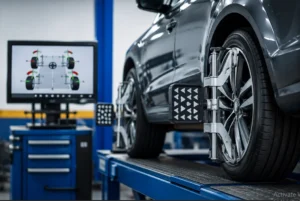
Tire alignment refers to adjusting the angles of the wheels to the manufacturer’s specifications. Proper alignment ensures that the tires meet the road at the correct angle and that they’re perpendicular to the ground and parallel to each other.
Why is Tire Alignment Important?
- Improved Handling: Misaligned tires can cause your vehicle to pull to one side, affecting handling and making it harder to steer in a straight line.
- Even Tire Wear: When your wheels are out of alignment, certain areas of your tires will wear down faster than others, reducing their lifespan.
- Better Fuel Efficiency: Misalignment can cause friction between the tires and the road, which can lead to higher fuel consumption. Proper alignment helps reduce this resistance and improve fuel efficiency.
Signs Your Vehicle May Need an Alignment:
- Your vehicle pulls to one side when driving straight.
- Your steering wheel is off-center, even when the vehicle is driving straight.
- You notice uneven or rapid tire wear.
Alignment issues can often be caused by hitting potholes, curbs, or general wear and tear. Having your alignment checked regularly can help ensure your tires are wearing evenly and your vehicle is handling properly.
3. Tire Balancing: Smooth Ride, Less Vibration
Tire balancing involves adjusting the weight distribution of your tires and wheels to ensure that they rotate evenly. Each tire and wheel has a specific weight, and if this weight isn’t distributed properly, it can lead to vibration and uneven tire wear.
Why is Tire Balancing Important?
- Smooth Ride: Properly balanced tires contribute to a smoother driving experience by eliminating vibrations caused by uneven weight distribution.
- Prevents Uneven Wear: Unbalanced tires can cause uneven wear patterns, especially on the edges of the tire.
- Reduces Stress on Vehicle Components: Vibration from unbalanced tires can put extra stress on your vehicle’s suspension system, leading to costly repairs.
Signs You Need Tire Balancing:
- You feel vibrations in the steering wheel, seat, or floorboard, particularly at higher speeds.
- Your vehicle’s tires wear unevenly, often causing the tread to wear more on one side.
- You notice steering wheel wobble or excessive shaking, especially at highway speeds.
Balancing is generally performed when new tires are installed, but it may also be necessary if you experience vibration issues while driving.
How Often Should You Perform These Services?
Tire Rotation: Every 6,000 to 8,000 miles, or as recommended by your vehicle manufacturer.
Tire Alignment: Once a year or every 12,000 miles, but more often if you experience steering issues or have hit a pothole or curb.
Tire Balancing: It’s typically done when tires are installed or when you notice vibration or uneven wear.
While these services can be done individually, it’s often a good idea to have them done together to maintain the best overall performance and extend the life of your tires.
Finally: Keep Your Tires in Top Condition
Routine tire maintenance, including rotation, alignment, and balancing, is essential for ensuring the safety, performance, and longevity of your vehicle. These services not only improve your driving experience by providing a smoother ride and better handling, but they also help to maximize the lifespan of your tires, saving you money on premature tire replacements.
At Mr. Lube USA, we offer expert tire services designed to keep your vehicle in optimal condition. Whether you need tire rotation, alignment, or balancing, our team of professionals is here to help. Regular maintenance ensures that your tires perform at their best, keeping you safe on the road.
Contact us today to schedule your tire maintenance appointment, and ensure your vehicle is ready for any journey.